What Is Bubble.io in 2026? Pricing, Limits, and Who Should Use It
Bubble.io in 2026 — pricing tiers, workload unit math, architectural limits, and the operator profiles where it fits — plus where it does not.
20 min read
You are looking at Bubble.io for the first time and the demos are seductive: drag-and-drop a database, wire up a workflow, deploy in an afternoon. Or you are already on Bubble and a workload-unit invoice just arrived that does not match what your finance team budgeted. Either way, the question you actually need answered is the same — does Bubble fit the business you are building, or is it the wrong shape for where you are headed?
This guide answers that question concretely. We map what Bubble is in 2026 (not what marketing pages claim), how the workload-unit pricing model creates surprises, what Bubble does materially better than custom code at small scale, and the architectural limits that catch teams late. By the end you should know whether Bubble is the right tool for your next 12 months — and what to do if it isn't.
What Bubble.io Actually Is in 2026
Bubble is a hosted visual development platform. You design your application's pages, data model, and server-side logic in a browser-based editor, and Bubble runs the resulting app on its own infrastructure. There is no code repository to clone, no servers to provision, no deployment pipeline to maintain. The platform handles hosting, scaling, database, authentication, and basic infrastructure as a single bundle.
The Three Things Bubble Replaces
Bubble's value proposition compresses three layers into one editor: a frontend framework (your visual UI), a backend runtime (workflows, API connectors, scheduled jobs), and managed infrastructure (database, file storage, basic SSL/CDN). For a non-technical founder, this means the difference between hiring three categories of expensive specialists and clicking through a setup wizard.
Who Bubble Targets
Bubble's marketing in 2026 still leads with three audiences: solo founders shipping MVPs, internal-tools builders inside non-engineering departments, and agencies productizing custom-software work for SMB clients. The platform has grown beyond these — there are companies running multi-million-dollar businesses on Bubble — but the design optimum is unmistakably the "first product, no engineering team yet" use case.
What Bubble Is Not
Bubble is not an open-source code generator. The .bubble export file is a proprietary backup format that can only be re-imported into Bubble itself; Bubble's own application-ownership documentation is explicit that there is no way to export your application as code. This single fact shapes every architectural and business decision a team should make about staying or leaving.
Pricing in 2026 — Plans, Workload Units, and the Hidden Math
Bubble switched from capacity-based pricing to workload-unit (WU) pricing in 2023, and 2026 is the year most teams have lived with the new model long enough to know whether it works for their app shape. The plan tiers are easy to read on a marketing page; the actual cost is harder to predict because every workflow, search, and API call consumes WUs at rates that depend on data volume and complexity.
Plan Tiers (2026)
The figures below reflect Bubble's published pricing page at the time of writing. Tier names, included WU allocations, and overage rates change periodically — re-check the source before budgeting.
| Plan | Monthly Price | Included WUs | Overage Rate | Best For |
|---|---|---|---|---|
| Free | $0 | 50K WUs | App pauses | Prototyping, learning the editor |
| Starter | ~$29–$32/month | 175K WUs | $0.30 per 1K WUs | Solo founder shipping an MVP |
| Growth | ~$119–$134/month | 250K WUs | $0.30 per 1K WUs | Early-stage SaaS with paying users |
| Team | ~$349–$399/month | 500K WUs | $0.30 per 1K WUs | Multi-collaborator product teams |
| Enterprise | Custom | Custom | Negotiated | Compliance / SLA / volume needs |
What a Workload Unit Actually Costs You
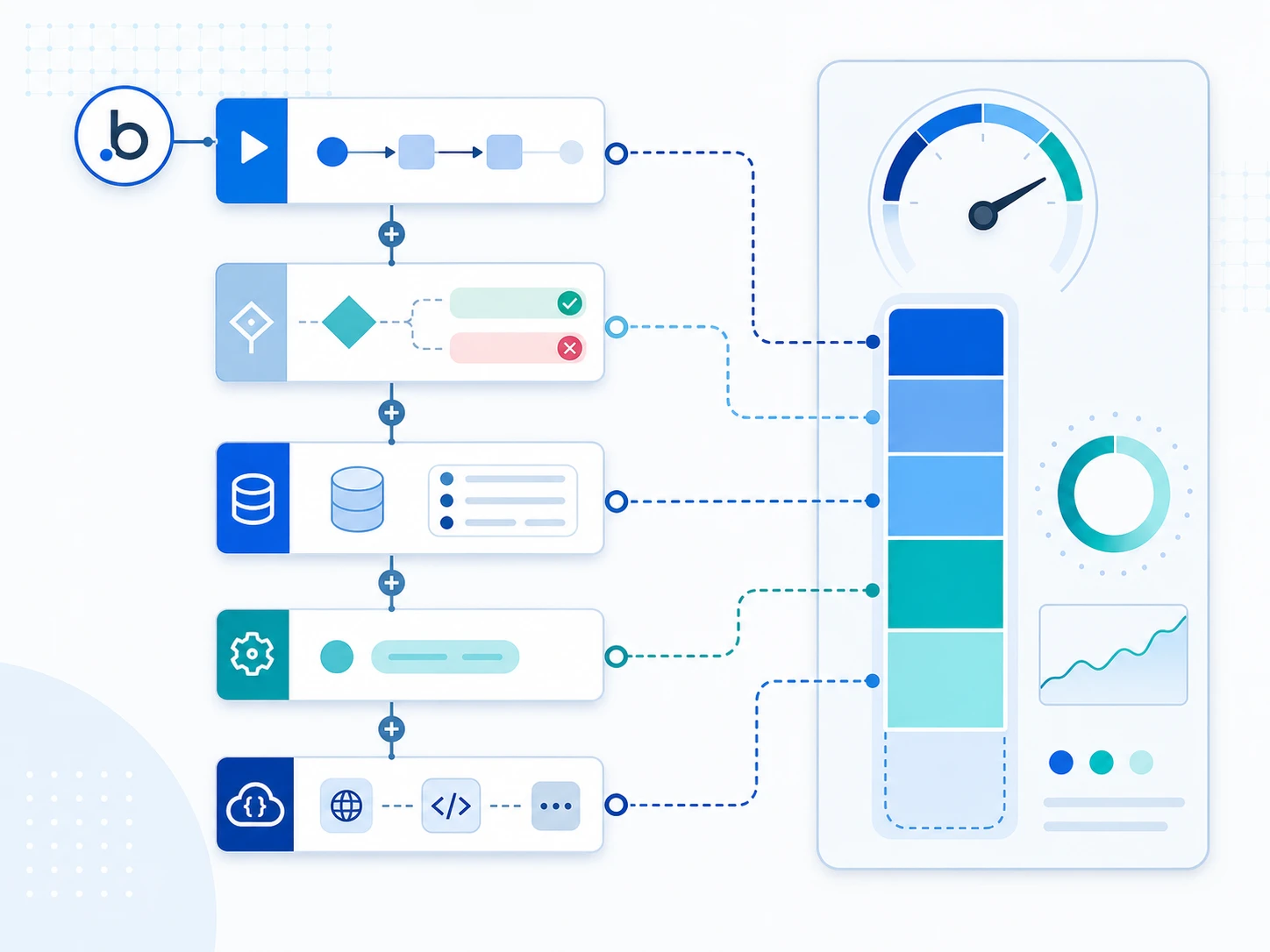
A workload unit is Bubble's abstraction for server-side compute. Page loads, database searches, workflow actions, API connector calls, and scheduled backend workflows all consume WUs at different rates. The relationship between visible work in the editor and metered cost is not always intuitive — a single workflow that looks like five steps can consume anywhere from a fraction of a WU to several dozen depending on data volume, condition evaluation, and whether it triggers recursive workflows on a list.
The Real Total Cost of Ownership
Most teams calculate Bubble's cost as just the plan price. The real number includes the plan, WU overages, paid plugins, and the freelancer or agency time required to keep the app working as it grows. A more complete breakdown lives in our workload-units guide, but the headline pattern is consistent: by the time a team is on the Team plan with regular overages and paid plugins, they are commonly spending materially more per month than the published tier suggests.
What Bubble Does Better Than Code in 2026
It is easy to find migration content that frames Bubble as a problem. The honest version is more nuanced: there are categories of work where Bubble is the rational choice in 2026, and where moving to custom code adds cost and risk for no real benefit.

Time From Idea to Live Users
For a non-technical founder testing whether an idea has any pull at all, Bubble compresses a multi-week engineering setup into an afternoon. Authentication, a database, basic CRUD UI, and a Stripe checkout can ship in a single weekend. Custom code can match this with a heavy starter template and an experienced developer, but the floor for "no engineer available" is set by Bubble.
Cost at Pre-Product-Market-Fit Scale
For an app that has 10 to 500 users and is still figuring out what to build, Bubble's $32–$134/month plan range is genuinely cheap relative to the developer-hours required to maintain an equivalent custom-code stack. The cost equation flips later — but it flips later, not at the start.
Internal Tools and Department-Built Software
Inside larger organizations, the alternative to Bubble for an internal tool is often "wait six months for the engineering team to prioritize it." Bubble lets a non-engineer in operations, finance, or HR build the tool themselves, which is not a comparison custom code can win on velocity grounds. Many enterprise Bubble deployments are department-built tools, not product apps.
Visual Logic for Non-Engineers
Bubble's editor is, on its own merits, an effective tool for representing business logic visually. People who would never read a function definition can read and modify a Bubble workflow. This matters when the product owner is the same person as the builder, and it matters when the team is small enough that a single non-engineer can keep the whole system in their head.
The Five Architectural Limits That Catch Teams
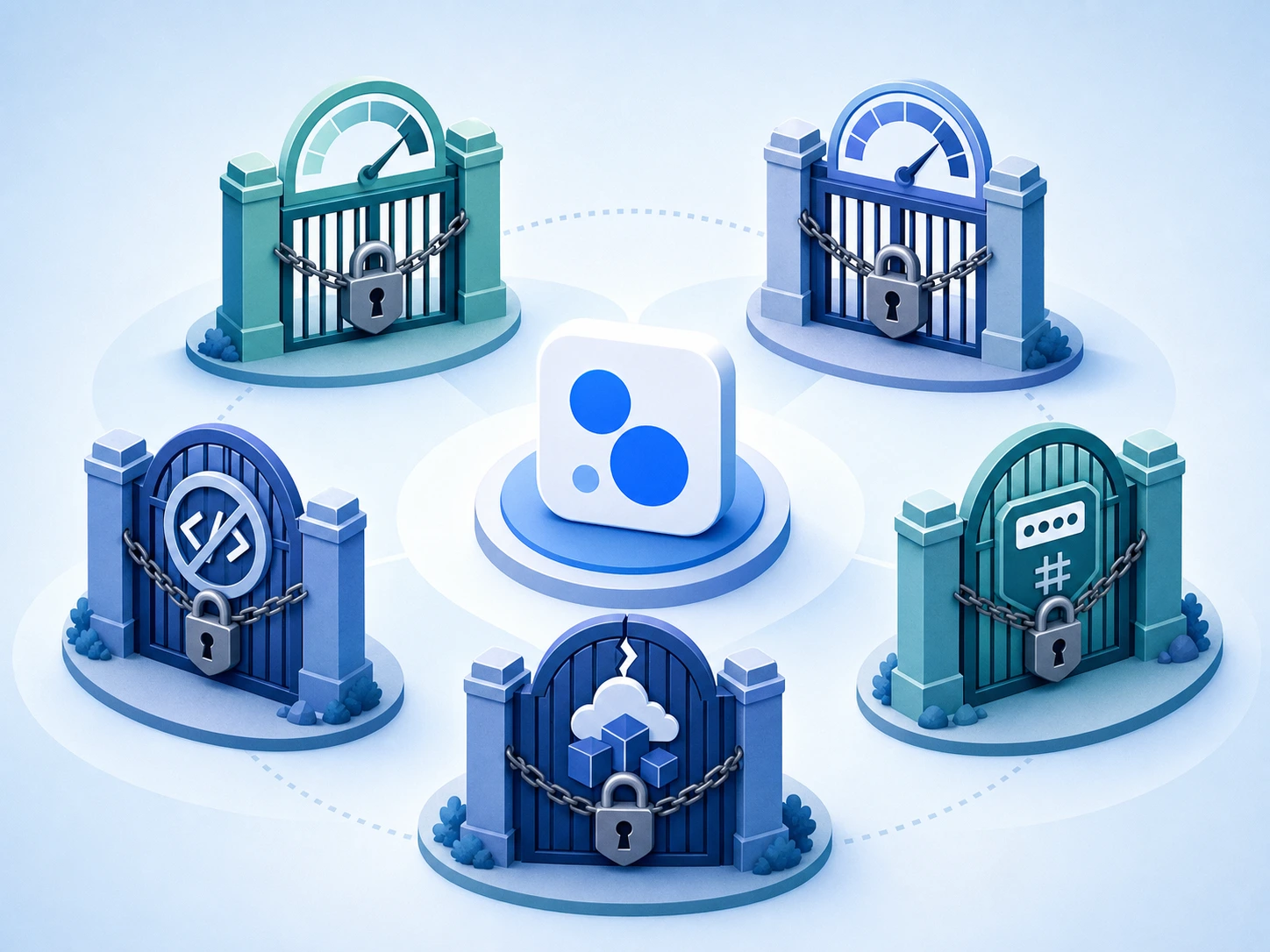
Every long-term Bubble user we have worked with eventually hits the same set of architectural limits. None of them are dealbreakers in isolation. The compounding effect is what pushes teams toward migration.
Limit 1 — The Workload Unit Ceiling
WU consumption tends to grow faster than user count, because each user generates more data, more searches, and more workflow triggers. A 2x increase in users can translate into a 3x or 4x increase in WUs. The cost-per-active-user curve is therefore not linear, and there is a band where the next plan tier is too expensive but staying on the current tier means runaway overages.
Limit 2 — The Performance Ceiling
Bubble pages render through a server-side runtime that competes with every other Bubble app on the same shared infrastructure. Page-load times that feel acceptable at 100 users can become marketing-hostile at 5,000 users — and there is little a team can do beyond plan upgrades and workflow optimization, because the runtime architecture itself is not under your control.
Limit 3 — The No-Export Rule
You cannot export a Bubble app as code. The .bubble file is a Bubble-only backup format, and Bubble's published documentation has, for several years, signaled that a code or full-architecture export tool is not in their near-term roadmap. This means every Bubble app is also implicitly a vendor lock-in story until you do a custom rebuild — and that rebuild gets harder the longer you stay.
Limit 4 — Password and Authentication Lock-In
Bubble does not export password hashes. The hashing methodology is proprietary and undisclosed, which means any migration off Bubble forces a re-authentication event for every user — a magic-link, OTP, or password-reset flow that has to be communicated to the user base in advance. Teams that discover this during cutover weekend face a crisis.
Limit 5 — Compliance and Audit Surface
Bubble advertises SOC 2 Type II for its platform infrastructure — verify the current scope on Bubble's trust/compliance page before assuming coverage. But the visual-editor model itself creates a structural problem for code audits: there is no readable source to review, no version control diff to attach to a change ticket, and no exportable architecture document to hand to an investor's diligence team. For consumer SaaS this rarely matters; for enterprise, fintech, or healthcare it commonly becomes a blocker.
Who Should Use Bubble in 2026
Bubble is the right tool for a specific window in a product's life. Three operator profiles consistently win with Bubble in 2026.

Profile A — Solo Founder Pre-PMF
You have an idea, no engineering team, and a budget measured in hundreds of dollars per month. You need to put a working product in front of users next week, not next quarter. Bubble's Starter or Growth plan on a clean architecture (few data types, two or three integrations, scheduled workflows kept lean) will run for a year while you find product-market fit, and the platform fee is an order of magnitude cheaper than hiring a contractor to build the same thing in code.
Profile B — Internal Tool Builder
You work in operations, finance, sales, or HR at a mid-sized company, and you need a tool that the engineering team will not prioritize. Bubble lets you build it yourself in days. The audience is small, the data volume is bounded, and the alternative is a quarter-long engineering ticket that may never ship. Bubble wins this category cleanly.
Profile C — Agency / Productized Service
You run an agency that builds custom apps for SMB clients with $20K–$60K budgets. Custom code at this price band leaves a thin margin; Bubble lets you ship in three to six weeks with a single builder and re-use components across clients. Many Bubble Gold-tier agencies operate this way, and the economics work well as long as the client knows what they are buying.
What These Profiles Have in Common
All three share the same shape: time-to-first-value matters more than long-term ownership, the team is small enough that one person can hold the whole app in their head, and the economic horizon is months rather than years. Bubble is excellent for that shape. It is not excellent for any other shape.
Who Should Plan to Leave Bubble
The mirror image is just as well-defined. If your business looks like any of the profiles below, the question is not whether to migrate but when — and how prepared you will be when the moment forces the decision.
Profile X — Past Product-Market Fit, Hiring Engineers
You have paying users, recurring revenue, and a hiring plan that includes at least one senior engineer in the next two quarters. The moment you have a real engineering team, Bubble's visual editor stops being a multiplier and starts being a constraint — engineers cannot grep workflows, version-control changes, or run automated tests on a Bubble app. Plan a structured migration window before the new hire's onboarding wastes a quarter on reverse-engineering the editor.
Profile Y — Pursuing Enterprise or Regulated Customers
Your target customer is asking for a SOC 2 report, a code audit, HIPAA-readiness, or contractual SLAs your platform cannot underwrite. The visual-editor architecture creates structural friction with each of these requirements. Even when Bubble's own infrastructure has the certifications, the audit story for your application is harder to tell when the source is not readable code.
Profile Z — Workload-Unit Bills That Do Not Fit Your Margin
Your monthly Bubble cost — plan plus overages plus plugins plus freelancer time — has crossed your finance team's threshold. The optimization ceiling is real: most apps can squeeze meaningful WU savings on first inspection but hit diminishing returns within a quarter. Past that ceiling, every additional user costs more than the unit economics support.
The First Step Is Architecture Documentation, Not Code
The most expensive mistake teams make when leaving Bubble is starting with the rebuild instead of the architecture audit. Your Bubble app is a black box the moment you try to hand it to a developer who did not build it — workflows, privacy rules, API connector configurations, and app settings are not visible from the editor demo. The first step of any sensible migration is a complete architecture extraction, which produces the specifications your engineers (or AI coding tools) work from. Relis exists for exactly this step: data schemas, API specs, backend workflow logic, and app settings extracted into nine standardized document types — typically in under ten minutes for medium-complexity apps.
Decide With Real Architecture, Not a Demo
Whether you stay on Bubble or plan to leave, knowing exactly what your app contains is the foundation. Extract your full Bubble architecture — data, APIs, workflows, settings — into a developer-ready blueprint in minutes.
Scan My App — FreeFrequently Asked Questions
Q. Is Bubble.io still worth using in 2026?
Yes, for a specific window: pre-product-market-fit founders, internal-tool builders, and agencies serving SMB clients on tight budgets. Bubble compresses three layers (frontend, backend, infrastructure) into one editor and remains the fastest path from idea to live users without an engineering team. It stops being the right tool once you are past PMF, hiring engineers, or pursuing regulated customers.
Q. How much does Bubble actually cost per month?
Plans start at around $29–$32/month (Starter), with Growth around $119–$134, Team around $349–$399, and Enterprise custom-priced. The real total of ownership includes workload-unit overages (which can be highly variable), paid plugins, and freelancer or agency time. Most scaling teams spend materially more than the published plan price by the time they are evaluating migration. Verify current rates on bubble.io/pricing.
Q. Can I export my Bubble app as code?
No. Bubble's official documentation states there is no way to export your application as code. The .bubble file is a proprietary backup format that can only be re-imported into Bubble. Migration off Bubble requires a custom rebuild — and the architecture audit that defines its scope is the highest-leverage step before any code is written.
Q. What happens to my users' passwords if I leave Bubble?
Bubble does not export password hashes. Every Bubble migration requires a forced re-authentication event — typically a magic-link or one-time-password flow on first login after cutover. This is real product work and needs to be planned and communicated to users before migration weekend, not discovered during it.
Q. When is the right time to migrate off Bubble?
Common signals that have appeared together in the migrations we have advised on: workload-unit overages becoming a recurring monthly line item, page-load times slipping past several seconds, an investor or enterprise customer asking for a code audit, a hiring plan that adds a senior engineer, and a competitive feature Bubble cannot model. When three of these bind in the same quarter, migration is usually the cheaper option — and starting with an architecture audit and migration roadmap is far cheaper than starting with code.
Q. Does Bubble have SOC 2 or HIPAA certification?
Bubble advertises SOC 2 Type II for its platform infrastructure. The current scope, applicability to your specific app's data flow, and HIPAA support depend on your plan tier and use case — verify on Bubble's official trust/compliance page before relying on it for regulated customers. Even with platform-level certifications, the visual-editor model can complicate the audit story for your application code itself.
Bubble Is a Tool, Not a Forever Home
- Bubble compresses three layers into one editor: frontend, backend, and managed infrastructure. That compression is the entire reason the platform is worth its price for the right operator profile.
- Pricing is plan + workload units + plugins + people: the published tier price is rarely the real total, and WU consumption tends to grow faster than user count.
- Bubble wins pre-PMF, in internal tools, and at agency scale: when time-to-first-value matters more than long-term ownership and one person can hold the whole app in their head.
- Five architectural limits create the migration tipping point: WU ceiling, performance ceiling, no-export rule, password lock-in, and compliance surface — they bind in clusters once teams scale.
- The first step of leaving is architecture documentation, not code: a complete extraction of your app's data, APIs, workflows, and settings is the artifact every sensible migration starts from.
Bubble is a real tool. It is also a tool with a clear shape. Treat it as the right answer for the season your business is in, not as a permanent commitment — and you will get the upside without paying the lock-in tax.
Your Bubble App Has No Export Button — Until Now
Relis extracts your complete Bubble.io architecture automatically. ERD diagrams, DDL scripts, API docs, workflow specs — all in under 10 minutes.
Your Bubble App Has No Export Button — Until Now
Relis extracts your complete Bubble.io architecture automatically. ERD diagrams, DDL scripts, API docs, workflow specs — all in under 10 minutes.