Bubble to Next.js vs Rails vs Django: How to Choose Your Migration Stack
A framework-by-framework comparison for Bubble.io migration — covering Next.js, Ruby on Rails, Django, and Laravel across data modeling, backend workflows, authentication, hosting costs, and hiring reality. Includes a decision matrix and Bubble feature mapping table.
19 min read
You have decided to migrate off Bubble.io. The workload unit bills crossed your threshold, the performance ceiling hit, or compliance demands forced the move. That decision was hard. The next one is harder — and gets far less attention.
Which tech stack do you rebuild on? Next.js, Ruby on Rails, Django, Laravel — each has passionate advocates, and each handles certain Bubble migration patterns better than others. Pick wrong and you add months to your timeline, blow your budget, or end up with a codebase nobody on your team can maintain. This guide maps every major Bubble feature to all four frameworks, compares real costs and timelines, and gives you a decision matrix that matches your specific situation to the right stack.
Why Stack Selection Determines Migration Outcome
Most migration guides skip straight to architecture extraction and assume you have already chosen a stack. In practice, stack selection is where migrations quietly succeed or fail.
The Compounding Effect
Your tech stack determines who you can hire, how fast they move, what your hosting costs, and how easily your codebase scales. A mismatch in any of these dimensions does not cause an immediate crisis — it creates a slow drag that compounds over months. Teams that pick Rails when their only available developers know Python spend weeks on onboarding instead of building. Teams that choose a full-stack JavaScript framework when their app is backend-heavy end up overengineering their frontend while the real complexity sits in untranslated workflows.
What Bubble Hides From the Decision
Bubble abstracts away the stack question entirely. You never chose between an ORM and raw SQL. You never picked a background job processor. You never compared authentication libraries. Now you must — and the architecture documentation you extract determines how well you can evaluate each option. A team with a complete blueprint — data schemas, API specifications, workflow logic, privacy rules — can map those artifacts to each framework and make an informed choice. A team without documentation is guessing.
The Four Contenders at a Glance
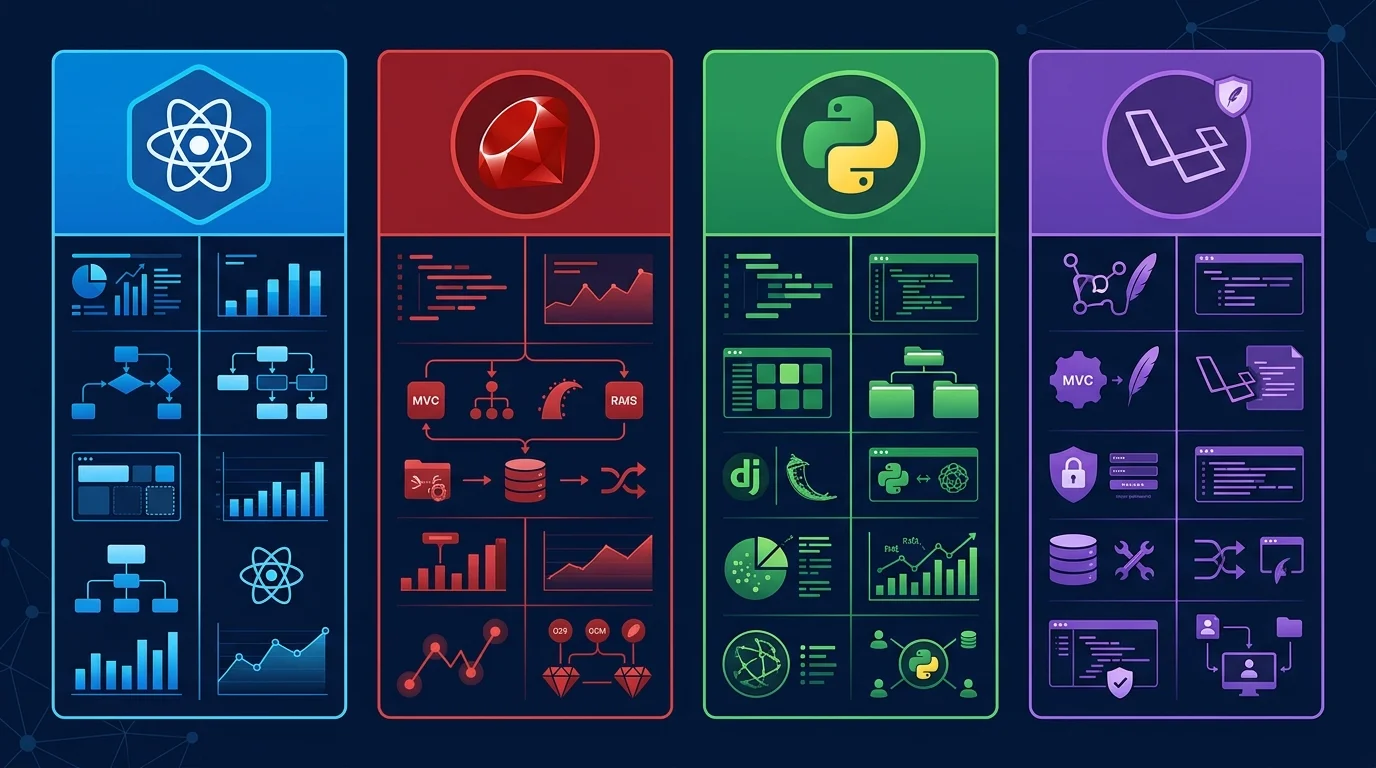
Every Bubble migration in 2026 lands on one of four stacks. Here is what each brings to the table before we go deeper.
Next.js (TypeScript)
Full-stack React framework with server-side rendering, API routes, and the largest frontend talent pool. Best for apps where SEO matters, where the frontend is the product's primary differentiator, or where the team already knows JavaScript. The ecosystem includes Prisma for database access, Auth.js for authentication, BullMQ for background jobs, and Vercel for zero-config deployment.
Ruby on Rails
The original "startup in a box" framework. Convention-over-configuration means less decision-making, faster scaffolding, and battle-tested patterns for authentication (Devise), background jobs (Sidekiq), and admin panels (ActiveAdmin). Best for teams that value development speed and can hire Ruby developers. Smaller talent pool than JavaScript or Python, but developers tend to be experienced.
Django (Python)
Batteries-included Python framework with an excellent built-in admin panel, robust ORM, and strong security defaults. Best for apps with complex data models, AI integrations, or teams with Python expertise. The ecosystem includes Celery for background tasks, Django REST Framework for APIs, and django-allauth for authentication.
Laravel (PHP)
The most popular PHP framework, known for elegant syntax and a comprehensive ecosystem. Includes built-in queue workers, scheduled tasks, authentication (Sanctum), and the cheapest hosting options of any stack. Best for teams with PHP developers or budget-conscious migrations where agency availability matters — Laravel has the largest number of development agencies worldwide.
| Factor | Next.js | Rails | Django | Laravel |
|---|---|---|---|---|
| Language | TypeScript | Ruby | Python | PHP |
| Philosophy | Flexible, composable | Convention over config | Batteries included | Elegant, pragmatic |
| Talent Pool | Largest (JS/TS) | Smaller, mature | Large (Python) | Large (esp. outside US) |
| Avg Developer Salary | Mid-high (JS premium) | Mid (smaller pool) | Mid-high (Python demand) | Mid-low (cheapest typical) |
| Hosting From | $0 (Vercel free) | $5/mo (Railway) | $5/mo (Railway) | $17/mo (Forge+DO) |
Bubble Features Mapped to Each Framework
This is the section most migration guides skip entirely. Your Bubble app is built on specific features — data types, workflows, privacy rules, API connectors — and each framework handles these differently. The mapping below shows exactly which library or pattern replaces each Bubble feature.
Data Layer
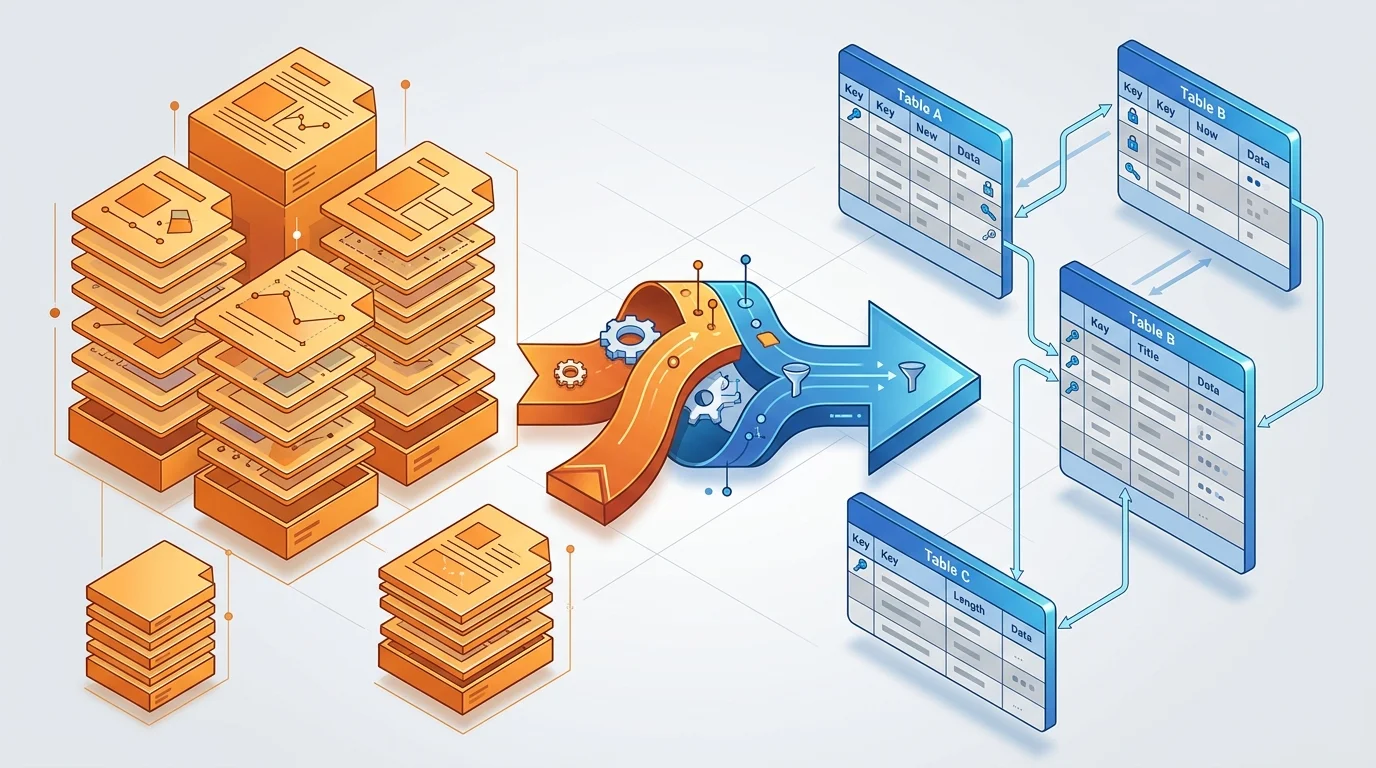
Bubble's data types become database models. Bubble's flat, document-style structure translates to relational tables with explicit foreign keys. Option sets become enums or lookup tables. The ORM you use determines how natural this translation feels.
| Bubble Feature | Next.js | Rails | Django | Laravel |
|---|---|---|---|---|
| Data Types | Prisma models | ActiveRecord | Django ORM models | Eloquent models |
| Option Sets | Prisma enums | Rails enums | Choices fields | PHP 8.1 enums |
| Privacy Rules | Middleware + policies | Pundit policies | django-guardian | Gate + Policies |
| File Storage | S3 + presigned URLs | ActiveStorage | django-storages | Filesystem driver |
Backend Logic
This is where Bubble apps carry the most hidden complexity. Backend workflows — triggers, scheduled tasks, recursive operations — are the number one source of migration surprises. Each framework uses a different background job processor, and the choice affects reliability, monitoring, and cost.
| Bubble Feature | Next.js | Rails | Django | Laravel |
|---|---|---|---|---|
| Backend Workflows | BullMQ + Redis | Sidekiq + Redis | Celery + Redis | Queue + Redis |
| Scheduled Workflows | node-cron | whenever gem | Celery Beat | Task Scheduler |
| Custom Events | EventEmitter | ActiveSupport | Django Signals | Events + Listeners |
| API Connector | fetch / axios | Faraday | requests | Guzzle / HTTP |
Authentication and Authorization
Bubble bundles authentication into its core. In custom code, you choose a library — and that choice affects session management, OAuth provider support, role-based access, and multi-tenancy. Every framework has a mature, production-tested option.
| Bubble Feature | Next.js | Rails | Django | Laravel |
|---|---|---|---|---|
| Email/Password | Auth.js v5 | Devise | django-allauth | Sanctum / Breeze |
| OAuth (Google, etc.) | Auth.js providers | OmniAuth | allauth providers | Socialite |
| Role-Based Access | Middleware | Pundit / CanCanCan | django-guardian | Policies + Gates |
- Rails Devise + OmniAuth: full auth system in under 30 minutes with generators
- Django allauth: email verification, social login, 2FA — all built-in
- Next.js Auth.js: flexible but requires more manual configuration
- Laravel Breeze/Jetstream: scaffolded auth with UI in one command
The Five-Factor Decision Framework
Stack selection is not a technology question — it is a team, timeline, budget, and architecture question. Evaluate each framework against these five factors in order of priority.
Factor 1: Team Expertise
The single strongest predictor of migration success. A team of Python developers will build a better Django app in four weeks than a better Next.js app in eight. Retraining costs real time — typically two to four weeks of reduced productivity per developer switching languages.
- If your team knows JavaScript/TypeScript → Next.js
- If your team knows Python → Django
- If your team knows Ruby → Rails
- If your team knows PHP → Laravel
- If hiring new → Next.js (largest talent pool) or Laravel (lowest cost)
Factor 2: Application Architecture
Your Bubble app's complexity profile should match the framework's strengths. An app with 50 backend workflows and 3 pages needs a different stack than an app with 50 pages and 3 workflows.
| App Profile | Best Stack | Why |
|---|---|---|
| Frontend-heavy (SEO, marketing pages) | Next.js | SSR/SSG, React ecosystem, Vercel edge |
| CRUD-heavy (admin panels, dashboards) | Rails or Django | Built-in admin, rapid scaffolding |
| Workflow-heavy (background jobs, scheduling) | Rails or Laravel | Sidekiq maturity, Laravel Scheduler elegance |
| Data/AI-heavy (analytics, ML integration) | Django | Python ecosystem, pandas/scikit-learn/pytorch |
| Budget-constrained | Laravel | Cheapest hosting, largest agency pool, lowest rates |
Factor 3: Hiring Market
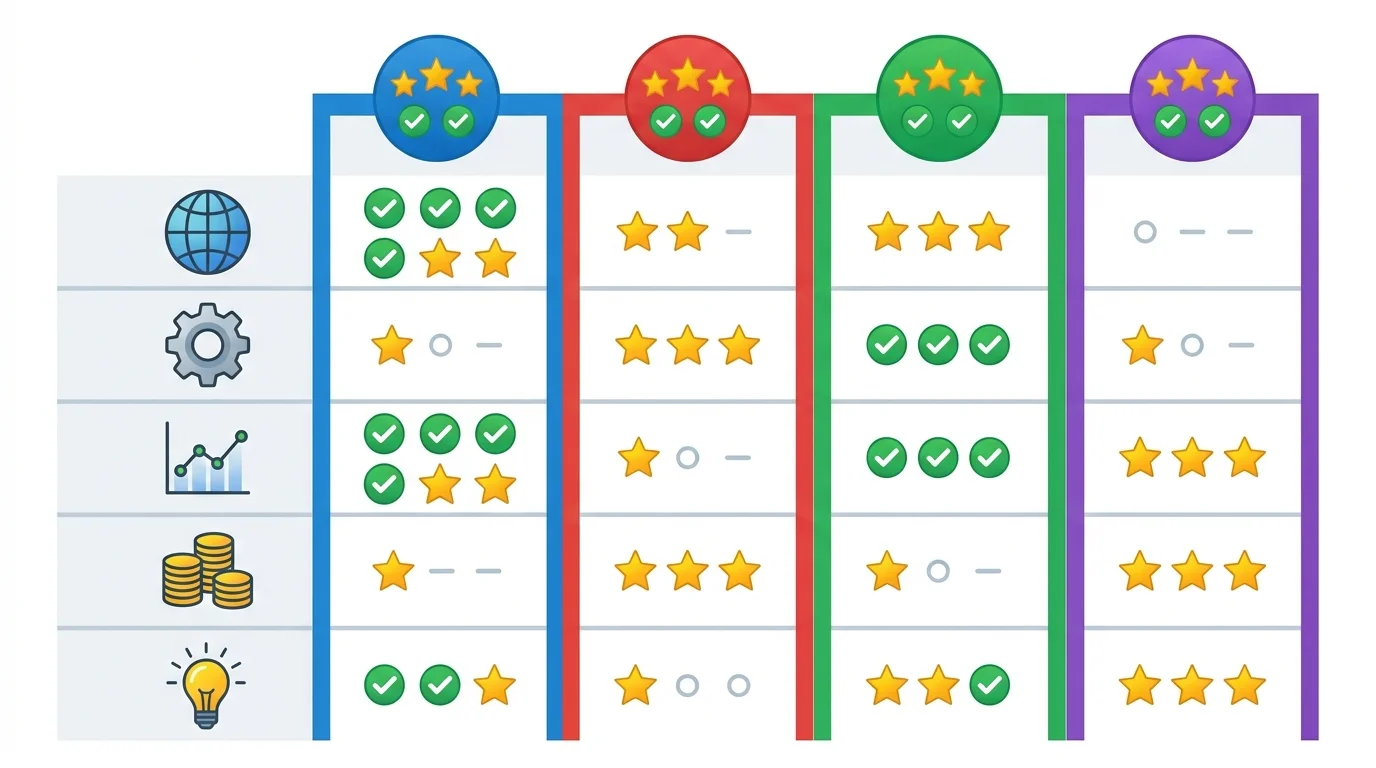
Your stack choice constrains your hiring pool for years. As of 2026, the relative ordering on most major job boards places React/Next.js at the top of the available-developer count, followed by Python/Django, with Laravel strong (particularly outside the US where PHP remains widely used) and Ruby on Rails appears smaller in recent surveys — talented but a smaller pool than the others. Verify current numbers on LinkedIn, Indeed, or your regional job boards before hiring decisions, since rankings shift quarterly.
Factor 4: Time to First Deploy
If your migration has a hard deadline — a compliance audit, a funding milestone, an investor requirement — the framework's out-of-the-box productivity matters. Rails and Laravel ship fastest because their conventions eliminate decision-making. A Rails developer can scaffold a full CRUD app with authentication, admin panel, and background jobs in a single day. Next.js offers more flexibility but requires more decisions upfront.
Factor 5: Long-Term Maintainability
The stack you choose today, your team maintains for years. Consider the framework's release cycle stability, backward compatibility track record, and community support trajectory. All four frameworks have active core teams and multi-year track records, but their stability profiles differ. Rails and Django prioritize backward compatibility. Next.js iterates faster with occasional breaking changes. Laravel balances both with annual major releases and clear upgrade paths.
Cost, Timeline, and Hiring Reality
Theory aside — here are the real numbers teams encounter when migrating from Bubble to custom code. These figures come from published case studies, agency estimates, and community reports from 2025 and 2026.
Migration Timeline by Complexity
| App Complexity | Next.js | Rails | Django | Laravel |
|---|---|---|---|---|
| Simple (5 pages, basic CRUD) | 2–3 weeks | 1–2 weeks | 2–3 weeks | 1–2 weeks |
| Mid (15 pages, workflows, API) | 4–6 weeks | 3–4 weeks | 4–6 weeks | 3–4 weeks |
| Complex (30+ pages, heavy logic) | 8–12 weeks | 6–10 weeks | 8–12 weeks | 6–10 weeks |
Rails and Laravel consistently finish faster for backend-heavy apps because their conventions eliminate the configuration decisions that slow down Next.js and Django projects. For frontend-heavy apps, Next.js closes the gap because its component model handles complex UIs more naturally than server-rendered templates.
Monthly Infrastructure Cost After Migration
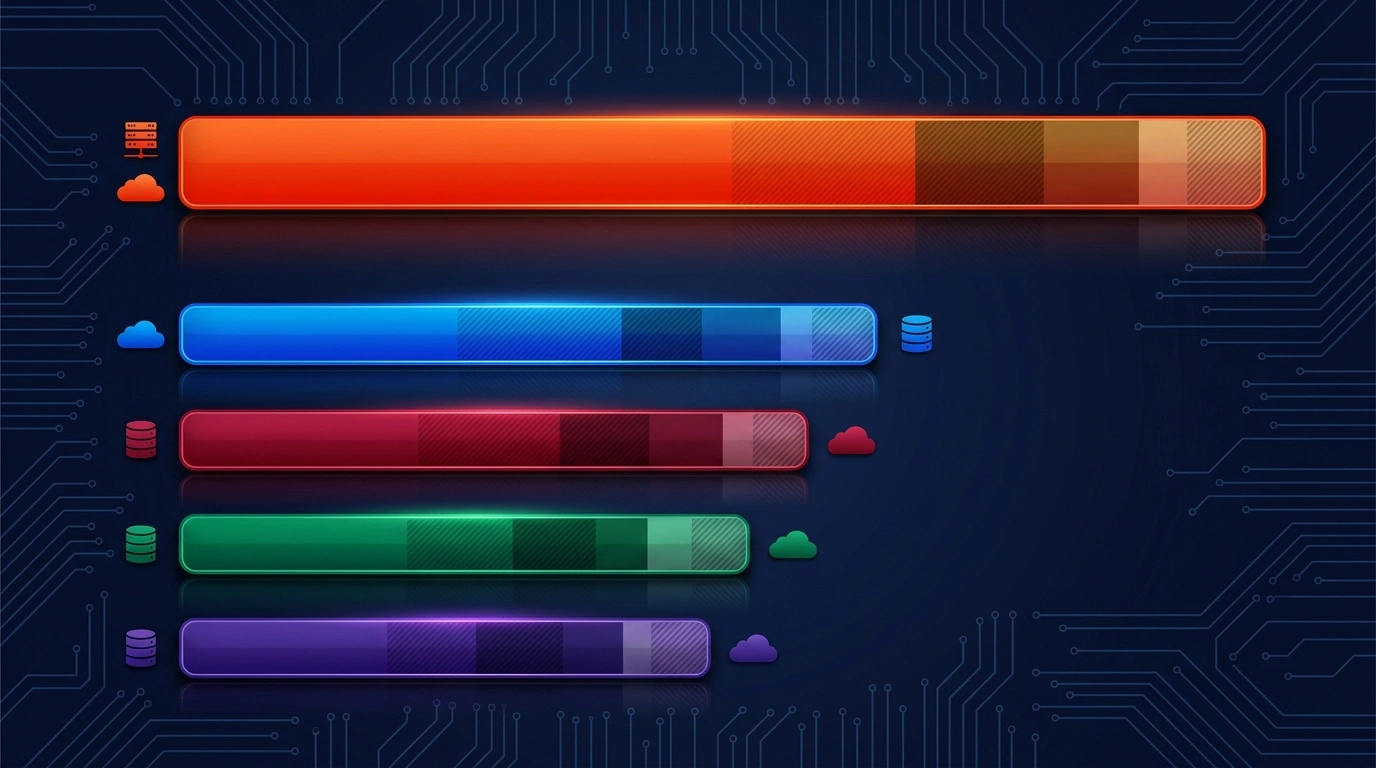
One of the strongest financial arguments for migration is the infrastructure savings. Bubble's higher-tier plans run into the high three figures per month before workload unit overages, and the published tier names and rates change periodically — re-check at the source before budgeting. Every framework in this comparison delivers the same functionality for a fraction of that cost.
| Component | Bubble higher-tier | Next.js | Rails | Django | Laravel |
|---|---|---|---|---|---|
| Compute + Hosting | Included | $0–20 | $20–50 | $20–50 | $5–20 |
| Database | Included | $15–50 | $15–50 | $15–50 | $15–50 |
| Email + Storage + CDN | Included | $25–70 | $25–70 | $25–70 | $25–70 |
| Total | High three figures+ | $40–140 | $60–170 | $60–170 | $45–140 |
The infrastructure savings alone — $200 to $300 per month — mean most migrations pay for themselves within six to twelve months, even before accounting for the broader cost benefits of owning your codebase.
Multiple Bubble vs custom-code performance comparisons published in migration retrospectives consistently report a several-times improvement in page load time when an equivalent app is rebuilt on a server-rendered or static framework. The improvement is visible to every user on every page load. Run PageSpeed Insights against your own pages and a comparable custom-code competitor to estimate the gap for your specific app rather than relying on an aggregate ratio.
Which Stack Fits Which App
After evaluating dozens of Bubble migrations, clear patterns emerge. The "best" stack is not the one with the most GitHub stars — it is the one that matches your team, your app, and your constraints.
Choose Next.js When
- SEO is critical: Your app has public-facing pages that must rank (marketplaces, content platforms, SaaS landing pages)
- Your team knows JavaScript/TypeScript: The largest developer talent pool makes hiring straightforward
- Frontend complexity is high: Rich interactive UIs, real-time updates, complex state management
- You want deployment simplicity: Vercel's zero-config deployment and edge functions reduce DevOps overhead
Choose Rails When
- Speed to market is paramount: Rails ships the fastest for standard CRUD applications
- Backend workflows dominate: Sidekiq is the most mature, battle-tested background job processor
- You value convention: Less decision-making means fewer mistakes and faster onboarding
- Your app needs an admin panel: ActiveAdmin or Rails Admin provides a production-quality admin interface in hours
Choose Django When
- Data complexity is high: The Django ORM handles complex queries and relationships elegantly
- AI or ML integration is planned: Python's ML ecosystem (PyTorch, scikit-learn, pandas) integrates natively
- You need a built-in admin: Django's admin panel requires zero additional code and works out of the box
- Security is a top priority: Django's security defaults (CSRF, XSS, SQL injection protection) are the strictest of any framework
Choose Laravel When
- Budget is the primary constraint: PHP hosting is the cheapest, developer rates are the lowest, agency availability is the highest
- Scheduling is complex: Laravel's Task Scheduler is the most expressive cron management of any framework
- You want an all-in-one ecosystem: Forge, Vapor, Nova, Horizon — Laravel's first-party tools cover deployment to monitoring
- Your team or agency knows PHP: Laravel has the largest number of development agencies globally
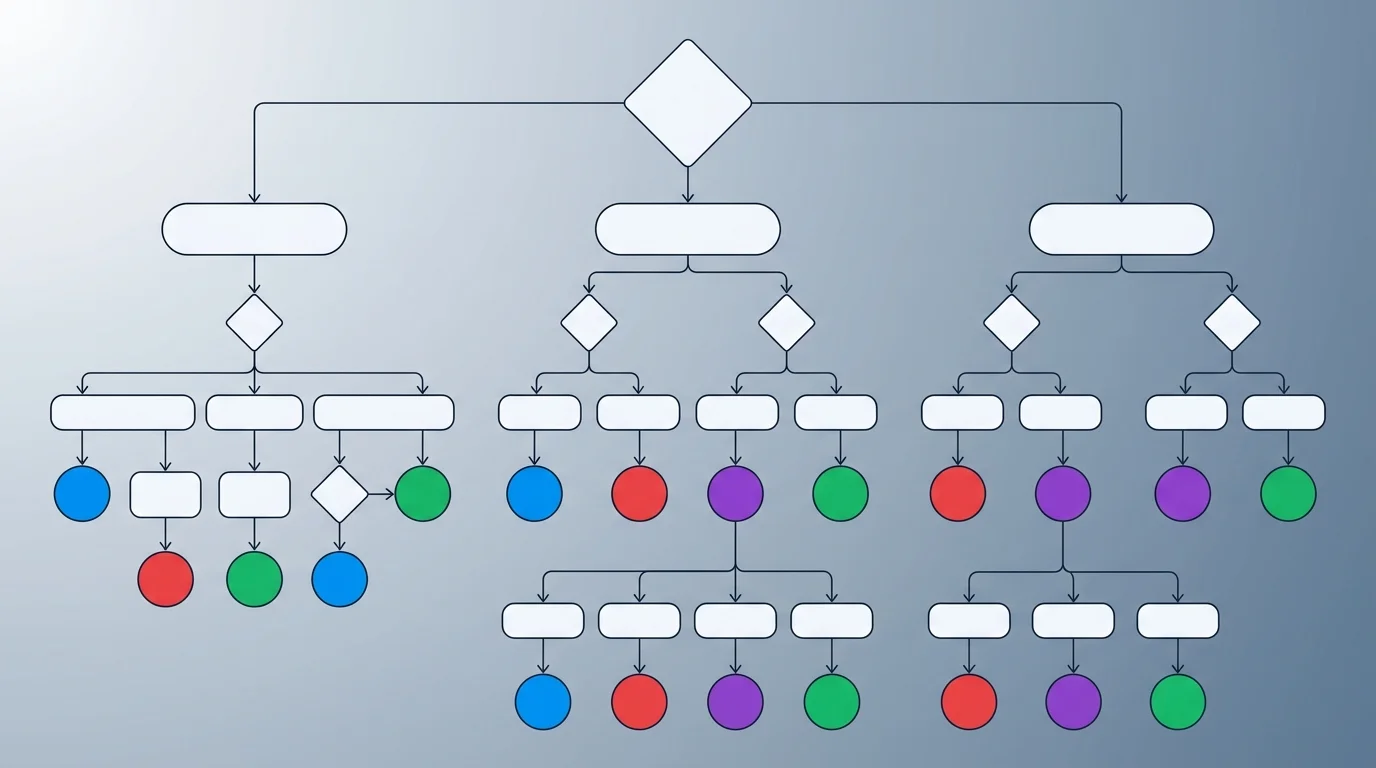
Any of these four frameworks can successfully host a migrated Bubble app. The difference between a smooth migration and a disastrous one is rarely the stack — it is the quality of your architecture documentation. An incomplete blueprint causes the same problems in Next.js as it does in Rails. Extract your complete architecture first, then choose the stack that matches your team.
Frequently Asked Questions (FAQ)
Q. Can I migrate from Bubble incrementally — one feature at a time?
Yes, using the Strangler Fig pattern. You route individual features to the new codebase while keeping the rest on Bubble. This works best with Next.js or Laravel, which handle API proxying naturally. The tradeoff is maintaining two systems during the transition, which adds operational complexity.
Q. I have no technical team. Which stack is easiest to outsource?
Laravel has the largest number of development agencies worldwide and the lowest average hourly rates. Next.js has the largest freelancer pool. For outsourced migrations, provide your architecture documentation to get accurate quotes — agencies estimate poorly without it.
Q. Does the stack affect AI-assisted migration?
Significantly. AI coding tools produce the best results with TypeScript (Next.js) and Python (Django) because these languages have the most training data. AI-assisted migration with structured Bubble blueprints works across all stacks, but TypeScript and Python generate fewer errors that require manual correction.
Q. What about Supabase, Firebase, or other Backend-as-a-Service options?
BaaS platforms replace parts of the stack, not the entire stack. Supabase can replace your database and auth layer in a Next.js migration. Firebase can handle real-time features. These are additive choices — you still need a framework to build your application logic and UI.
Q. How do I migrate my Bubble database to the new stack?
Bubble allows CSV export of data types. For complex migrations, extract your schema first to understand all field types, relationships, and option sets, then build migration scripts that transform Bubble's flat structure into relational tables with proper foreign keys. Each framework's ORM handles the import differently.
Q. Is it possible to switch stacks mid-migration if I made the wrong choice?
Possible but expensive. Switching after significant development has started typically costs 40 to 60 percent of the original budget. This is why upfront stack selection — informed by complete architecture documentation — is worth the time investment.
Pick a Stack, Then Get Your Blueprint
- Match your team first: The best framework is the one your developers already know. Retraining costs more than any performance difference between stacks.
- Match your app profile second: Frontend-heavy apps fit Next.js. Backend-heavy apps fit Rails or Laravel. Data-heavy apps fit Django.
- Budget and hiring drive the tiebreaker: When two stacks are equally suitable, pick the one with cheaper developers and better agency availability in your region.
- Document before you choose: A complete architecture blueprint lets you evaluate each framework against your actual app — not against hypothetical requirements.
- Infrastructure savings fund the migration: Moving from Bubble Scale ($349+/month) to self-hosted ($40–170/month) means the migration pays for itself within a year.
The stack question gets the most debate but accounts for the least migration risk. The real risk is migrating without knowing what your Bubble app actually contains. Start with the blueprint. The stack choice follows naturally.
Extract Your Bubble Architecture Before Choosing a Stack
Relis analyzes your Bubble app and produces complete documentation — data schemas, API specifications, backend workflows, and privacy rules — in the format every framework needs as input.
Get Your Blueprint →Ready to Plan Your Migration?
Get a complete architecture blueprint — ERD, DDL, API docs, workflow specs — everything your developers need to start rebuilding.
Ready to Plan Your Migration?
Get a complete architecture blueprint — ERD, DDL, API docs, workflow specs — everything your developers need to start rebuilding.